
I’m excited to walk you through a comparison of three popular home espresso machines I’ve been testing: the Gevi Commercial Espresso Machine (20Bar Pressure & Smart OPV System, 58mm portafilter with milk frother), the Gaggia RI9380/51 Classic Evo Pro (Industrial Grey), and another Gevi entry marketed as the Gevi Commercial Espresso and Coffee Makers (Professional 20 Bar with milk frother, stainless steel compact cappuccino machine). I’ll be looking at real-world things that matter to home users—brew quality, steam power and milk texture, build and materials, ease of use and cleaning, and whether they make a good gift or daily workhorse. I want this to feel like a friendly chat, so I’ll point out what surprised me, what felt reliable, and which machine matched different needs and budgets.
Espresso machines have come a long way since the early steam and lever models of the 1900s; mid-century inventions introduced pump-driven machines and over the decades manufacturers added features like OPV (over pressure valves), PID temperature control, and commercial-size portafilters that bring café-style extraction into the home. Owning one of these machines gives you consistent espresso shots, the ability to steam and texture milk for lattes and cappuccinos, and the flexibility to experiment with grind, dose, and tamp to improve your coffee skills. Beyond taste, they can save money over frequent café visits, make great gifts for coffee lovers, and turn brewing into a satisfying hobby. Features like a 58mm portafilter and 20-bar pump claims are common selling points—what really matters is how those specs translate to real extraction and steam performance, which I test in practical use.
In the rest of the article I’ll go through each machine in more detail—what I liked, what I didn’t, who each machine is best for, and a quick comparison to help you choose. I’ll show specific strengths and trade-offs so you can decide whether the Gevi models or the Gaggia Classic Evo Pro better match your routine, space, and taste preferences.
Gevi Espresso Machine — 20‑bar Pressure, Smart OPV, 58mm Portafilter with Milk Frother — Ideal for Home & Gifts
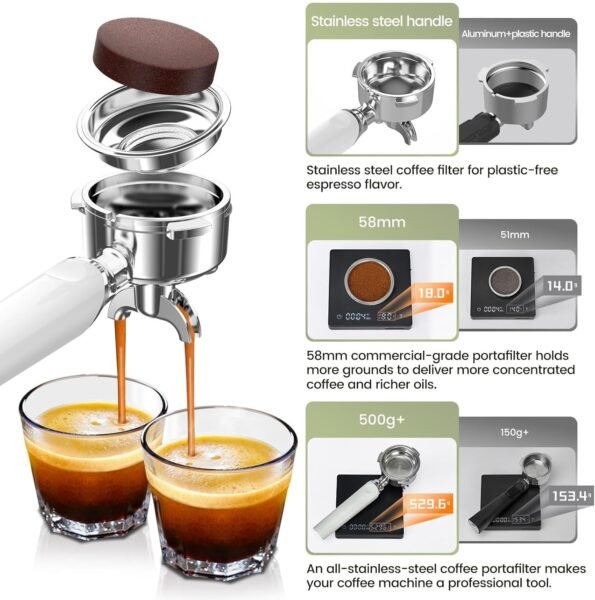
I see the Gevi Commercial Espresso Machine as a bridge between home hobbyists and aspiring home baristas who want real, café-style shots without committing to a full prosumer rig. I use it for daily espresso pulls, milk-based drinks like lattes and cappuccinos, and for experimenting with extraction and temperature profiles. It suits anyone who wants more control than a basic pod or capsule machine, but doesn’t need a commercial footprint.
My typical uses include single and double-shot espresso for morning routines, steaming milk for weekend latte art practice, and making multiple drinks when friends stop by thanks to the large-capacity water tank. It’s also a popular gift choice — the package reads like a practical present for someone who takes their coffee seriously.
What won me over first was the precision extraction capability. The combination of the OPV (Over Pressure Valve) and three-way solenoid valve stabilizes extraction at 9-12 bar, so I consistently avoid the bitter edge from over-extraction. Having that pressure tightly managed makes dialing in my grind and dose noticeably more rewarding.
I really appreciate the dual display real-time monitoring. The touch panel plus an extraction pressure gauge and digital readout let me watch pressure, time, and temperature at a glance — which is a huge help when I’m experimenting. The PID+NTC temperature control with three preset temperatures (92°C, 94°C, 96°C) gives me predictable flavor outcomes. I can taste the difference when I switch temps to match different beans.
The 58mm commercial-grade portafilter is a standout. Compared to smaller home portafilters, the wider diameter improves distribution and extraction, so my espressos have richer oil and aroma. The 20-Bar ULKA pump delivers quick, stable pressure, and the semi-automatic steam wand with a three-hole nozzle produces excellent microfoam for latte art.
My read on this machine’s purpose is straightforward: deliver café-quality espresso and milk drinks in a compact, user-friendly package while giving the user meaningful control over extraction and temperature. It’s built to be both an upgrade for everyday drinkers and a learning platform for people improving their barista skills.
- OPV (Over Pressure Valve) and three-way solenoid valve to maintain 9-12 bar extraction pressure
- Dual Display Real-Time Monitoring (pressure gauge + digital screen) for pressure, time, temperature
- PID+NTC dual system temperature control with three precise options (92°C, 94°C, 96°C)
- 58mm commercial-grade portafilter for better grounds distribution and fuller extraction
- 20-Bar ULKA pump for stable high-pressure flow
- Semi-automatic steam wand with three-hole nozzle for consistent microfoam
- 2.3L detachable water tank for multiple cups without frequent refills
- Thickened stainless steel housing for durability and easier cleaning
- 12-month warranty plus lifetime technical support
In practice, the OPV and pump mean I don’t need to constantly worry about over-extracting. The dual display makes learning shot times and pressure curves tangible. When I switch temperature settings with the PID control, I can quickly notice how acidity and sweetness balance shifts — which is exactly what I want when testing different beans. The sizable water tank and solid portafilter make successive drinks consistent and less fiddly.
The machine feels robust. The claim of a thickened stainless steel housing — with multiple protective layers — translates to a more substantial, easy-to-clean exterior. The 58mm portafilter is stainless steel and feels commercial-grade; it handles distribution and tamping much better than smaller home portafilters. Components that I touch often, like the steam wand and filter basket, present as well-made and purpose-built.
Performance is very good for the class. The 20-Bar ULKA pump provides the necessary headroom for fast pre-infusion and stable extraction. Because of the OPV and solenoid valve control, the actual brew pressure stays in the optimal 9-12 bar window, so shots are balanced and crema-rich. Heat stability from the PID system keeps temperature swings minimal between consecutive shots, which matters for consistent flavor. I’ve found the machine reliable in daily use; plus, Gevi’s 12-month warranty and lifetime technical support give me added peace of mind.
For a semi-professional machine, it’s quite approachable. The touch panel and displays reduce guesswork. The 2.3L detachable water tank is easy to remove and refill. Cleaning the steam wand and backflushing (where applicable) are straightforward. Like any machine with a commercial-sized portafilter and steam wand, there’s a learning curve to perfect steaming and dosing, but the controls and feedback make that curve enjoyable rather than frustrating.
-
Bold, consistent espresso extraction thanks to OPV and 9-12 bar regulation
-
Dual Display and pressure gauge for real-time feedback — ideal for learning and dialing in shots
-
PID+NTC temperature control with three precise settings for flavor tuning
-
58mm commercial-grade portafilter boosts aroma and extraction quality
-
Powerful 20-Bar ULKA pump for stable pressure and quick brewing
-
Semi-auto steam wand with three-hole nozzle produces excellent microfoam
-
Generous 2.3L water tank for multiple drinks without constant refilling
-
Durable, easy-to-clean stainless steel housing
-
12-month warranty and lifetime technical support provide strong aftercare
-
It doesn’t include a grinder — to get the most from the 58mm portafilter you’ll need a good burr grinder (separate purchase)
-
More advanced than entry-level machines, so beginners will face a learning curve to master dosing, distribution, and steaming
-
The machine is compact but still heavier and larger than basic home machines, so it needs dedicated counter space
-
Some users may find the control panel and multiple settings more complex than simpler “press-and-go” models
I’ve enjoyed using the Gevi as my daily driver when I want café-level results without the expense and size of a commercial machine. Its combination of pressure control, temperature precision, and commercial-grade portafilter helps me produce shots that consistently satisfy both my morning routine and my weekend espresso experiments. If you’re ready to step up from basic home machines and want control without an industrial footprint, this Gevi model is a compelling option.
[Here are three simple versions you can use:
- Gaggia Classic Evo Pro Espresso Machine — Industrial Grey (Small)
- Gaggia Classic Evo Pro Espresso Machine, Small — Industrial Grey
- Gaggia RI9380/51 Classic Evo Pro Espresso Machine — Small, Industrial Grey](https://www.amazon.com/dp/B086H42T3V?tag=felipemiliona-20)
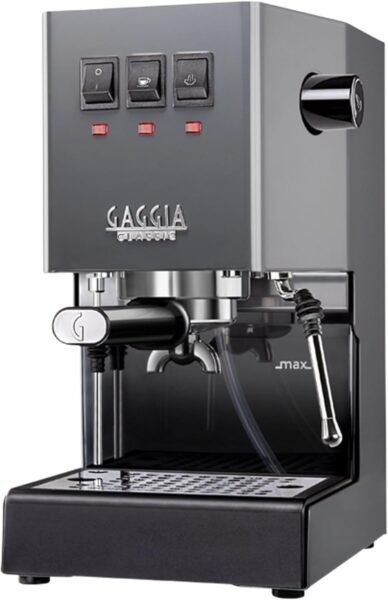
I use the Gaggia RI9380/51 Classic Evo Pro primarily for home espresso brewing where I want cafe-level results without occupying a whole countertop. If you’re like me and appreciate a compact machine that still delivers punchy shots and silky microfoam for milk drinks, this is aimed at you. The unit’s size—marketed as Small—means it fits neatly in modest kitchens, apartment nooks, or even a home office where I like to keep my caffeine workflow tidy.
This machine is best for enthusiasts who want more control than an entry-level pod machine offers but don’t want the size or complexity of a full prosumer setup. I reach for it when I crave consistency, a proper 9 Bar extraction, and the ability to dial in tamping and grind without an army of bells and whistles.
There are a few simple reasons I keep recommending the Classic Evo Pro. First, the build feels reassuring: the Solid Steel Housing gives the machine a durable, premium vibe that translates into confidence every morning. I enjoy the tactile feedback of the Stainless Steel 58mm Commercial Portafilter, which is the same diameter used in many commercial machines—this makes dosing and extraction feel genuinely professional.
Another major draw is the steam capability. The Commercial Steam Wand produces steam pressure and articulation that let me create velvety microfoam for lattes and cappuccinos; I found it much easier to texture milk consistently than with many consumer machines. Also, the inclusion of a Commercial Three Way Solenoid Valve helps purge and dry the puck after extraction, improving shot clarity and making clean-up quicker.
Finally, I appreciate that it’s Made in Italy—that heritage translates into design choices that favor espresso quality and workflow over flashy extras.
At its core, the Gaggia RI9380/51 Classic Evo Pro is built to produce espresso with a focus on replicating a semi-professional workflow in a compact footprint. The machine is engineered around several key features that impact the end result:
- Solid Steel Housing: This design choice improves heat stability and durability. The casing not only looks good in my kitchen, it also helps the machine feel stable during operation.
- Made in Italy: Beyond marketing, this indicates design and manufacturing approaches steeped in espresso tradition—components and ergonomics that prioritize the brewing process.
- 9 Bar Espresso Extractions: The pump and group head are tuned to deliver the pressure profile required for proper espresso. While pressure alone isn’t everything, consistent 9 Bar delivery is essential for extracting the oils and flavors I want in a shot.
- Stainless Steel 58mm Commercial Portafilter: A large portafilter implies better puck distribution and more even extraction. I notice less channeling and a thicker crema compared to narrower consumer portafilters.
- Commercial Three Way Solenoid Valve: This valve relieves pressure and purges the group head after extraction. In practical terms, that means less sogginess in the puck and fewer drips on the counter—small quality-of-life wins that add up.
- Commercial Steam Wand: Powerful, responsive steam that lets me stretch and texture milk quickly. The articulation and steam volume mean I can froth larger amounts when guests visit without a long wait.
Beyond those headline features, the machine includes familiar home-friendly touches: easy-to-access water reservoir or plumb options depending on model variations, straightforward control buttons, and an accessible drip tray that I can empty and clean without fuss.
I evaluate overall quality by looking at build, reliability, and consistency. The Classic Evo Pro scores well in all three. The Solid Steel Housing resists dents and feels substantial—when I move the machine to clean behind it, I don’t worry about flimsy panels bending. Internally, the components like the Stainless Steel 58mm Commercial Portafilter and the Commercial Steam Wand are engineered with longevity in mind; they’re parts I can see myself using for years.
Performance-wise, shots are repeatable. With a decent grinder, I can hit the same extraction time and yield repeatedly, and the crema and flavor are comparable to what I get in many cafes. The Commercial Three Way Solenoid Valve contributes to clean, dry pucks and reduces maintenance annoyances. Temperature stability is solid for a machine of this class—ramps are quick enough that I’m not waiting too long between milk steaming and pulling a shot.
There are a few caveats: as with many compact, semi-pro machines, there’s a learning curve. I had to experiment with grind, dose, and tamp to dial in the optimal profile. Also, while the 9 Bar pumping is consistent, it doesn’t substitute for advanced PID control—so if you want micro-temperature tinkering for exotic beans, this isn’t a dedicated lab. Still, for the price and size, the quality is impressive and reliable for everyday use.
Pros
- Bold, durable construction: Solid Steel Housing looks and feels premium.
- Professional extraction components: Stainless Steel 58mm Commercial Portafilter delivers cafe-level shot quality.
- Effective milk steaming: Commercial Steam Wand produces smooth microfoam for cappuccinos and lattes.
- Cleaner extractions: Commercial Three Way Solenoid Valve reduces mess and improves puck dryness.
- Italian design heritage: Made in Italy craftsmanship oriented toward espresso performance.
- Compact footprint: marketed as Small, it fits comfortably on most countertops without sacrificing essential features.
Cons
- No advanced PID temperature control: temperature tweaks are less granular than some prosumer models.
- Learning curve: dialing in shots requires time and a decent grinder to match the machine’s potential.
- Limited automation: if you want one-touch specialty drinks, this machine leans toward manual operation.
- Size trade-offs: while compact, the water reservoir capacity may require more frequent refilling if you make multiple drinks in a row.
I find the Gaggia RI9380/51 Classic Evo Pro to be an excellent middle ground between consumer convenience and professional capability. It delivers the bold, concentrated flavors I expect from true espresso and provides the tools—like the 58mm portafilter and Commercial Steam Wand—to make textured milk drinks that impress friends. If you enjoy tinkering with grind and dose and want a compact, sturdy machine with genuine commercial components, this one has been a reliable and rewarding companion in my kitchen.
Gevi 20‑Bar Stainless Steel Espresso Machine with Milk Frother — Compact Professional-Style Cappuccino Maker for Home
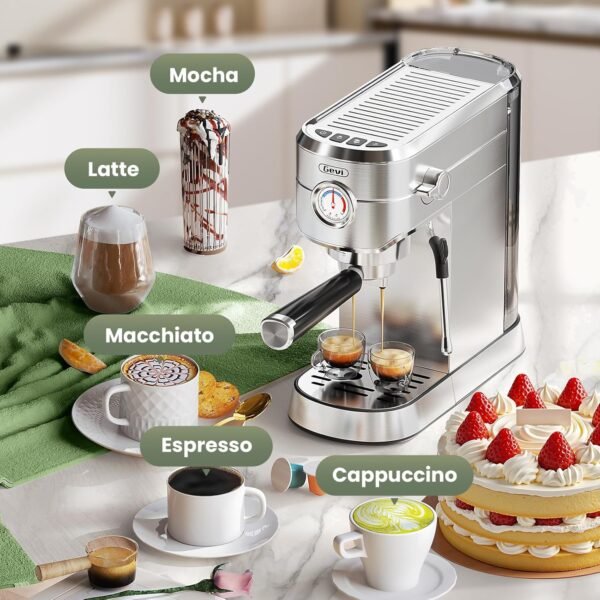
I bought the Gevi espresso machine because I wanted a compact, reliable way to make café-style drinks at home without taking up the whole counter. If you’re like me — someone who enjoys a strong espresso, a creamy cappuccino, or a quick Americano — this machine is aimed at home and small office users who want barista-style results without the learning curve or footprint of a commercial unit.
My daily routine with the Gevi usually involves pulling an espresso shot first thing, then frothing milk for a cappuccino or latte. I also use the hot water function for an Americano or to warm a cup before brewing. It’s straightforward enough that guests can use it with minimal coaching, and the removable parts make quick cleanups possible when I’m in a rush.
What I love most is how the Gevi balances performance and size. The 20-bar pump and NTC temperature control deliver consistent extraction, and the pre-infusion feature helps reduce channeling for more even flavor. The pressure gauge is a small but satisfying addition — I can visually confirm the brew pressure and tweak my grind or tamping if needed. The powerful steam wand turns milk into silky microfoam quickly, which made my homemade lattes feel much more professional.
The all-stainless steel housing feels sturdy and looks great on my countertop. Because it’s compact, it doesn’t dominate the kitchen. The controls are intuitive; I appreciate that it’s semi-automatic so I can focus on taste rather than programming. Cleaning is easier than I expected: the removable froth nozzle and accessible drip tray simplify maintenance.
The Gevi Commercial Espresso and Coffee Maker is designed to let you craft a range of café-quality beverages at home or in a small office. Its aim is to offer core professional features in a compact cappuccino machine that’s simple to use and maintain.
- 20-bar pump — provides strong and steady pressure for proper extraction.
- NTC temperature control — helps maintain stable brewing temperature for consistent flavor.
- Pre-infusion — gently wets the coffee puck before full extraction to improve uniformity.
- Pressure gauge — gives visual feedback about extraction pressure.
- Powerful steam wand with removable froth nozzle — produces smooth microfoam and is easy to clean.
- Stainless steel housing — durable, stylish, and heat-retentive.
- Compact footprint — perfect for small counters and kitchens.
- Hot water function — useful for Americanos, tea, and warming cups.
- Semi-automatic operation — balances automation with manual control for home baristas.
- 12-month warranty and lifetime tech support — gives peace of mind if anything goes wrong.
I’ve used it to pull straight espresso, brew Americano, create latte art-friendly microfoam, and heat water for tea or instant soups. The machine’s versatility makes it a great gift for anyone serious about coffee but limited by space or budget.
My impression of build quality is positive. The stainless steel exterior feels robust and resists fingerprints better than cheaper plastic alternatives. Internal components and the portafilter feel solid enough for regular home use. While it’s not an industrial espresso machine, the materials and assembly suggest it will handle daily sessions without major issues.
Performance-wise, the 20-bar pump and NTC temperature control produce shots that are richly flavored and balanced when I dial in the grind. The pre-infusion and pressure gauge are features I didn’t expect at this price point and they genuinely improve extraction consistency. The steam wand is powerful; it steams milk fast and creates excellent texture for cappuccinos and lattes. Over months of use, it has been dependable; I haven’t had any mechanical failures, and the included 12-month warranty plus the promise of lifetime tech support is reassuring.
Routine maintenance is straightforward. The removable froth nozzle and accessible drip tray simplify cleaning, and the stainless surfaces are easy to wipe down. I do recommend descaling periodically depending on your water hardness, and taking a few minutes to purge the steam wand after each milk session to keep things hygienic.
-
Great extraction with a 20-bar pump and pressure gauge for visual feedback.
-
Stable temperature control via NTC sensor improves shot consistency.
-
Powerful steam wand produces silky microfoam quickly.
-
Compact footprint is ideal for small kitchens or offices.
-
Durable stainless steel housing that looks and feels premium.
-
Pre-infusion helps yield smoother, more even extractions.
-
Hot water function adds versatility for Americano, tea, and cup warming.
-
User-friendly, semi-automatic controls make it accessible for beginners and enjoyable for enthusiasts.
-
12-month warranty and lifetime tech support for peace of mind.
-
It’s semi-automatic, not fully automatic — if you want one-touch drinks, this might feel slightly manual.
-
The water reservoir is compact, which means more frequent refills if you make several drinks back-to-back.
-
While the machine feels durable, heavy daily commercial use would likely outpace a true commercial unit. It’s best suited for home and light office environments.
-
For absolute precision, the built-in pressure gauge is helpful but lacks the granularity of high-end commercial equipment.
I’ve found the Gevi to be an excellent balance of performance, size, and value. It gives me the key features I need to craft high-quality drinks without fuss, and the stainless steel, 20-bar setup with milk frother makes it a strong contender for anyone looking to upgrade from pod machines or basic drip brewers. If you want a compact machine that feels like a step toward real home barista territory, this one is worth a look.
Comparison — quick overview
I compared the three machines you asked about: the two Gevi listings (the OPV / PID model and the Professional 20‑Bar model) and the Gaggia RI9380/51 Classic Evo Pro. The two Gevi machines are very similar in core hardware (20‑bar ULKA pump, 58 mm portafilter, stainless‑steel body and steam wand), but the OPV/PID Gevi emphasizes pressure management, digital displays and precise temperature control. The Gaggia is the more traditional, established home‑espresso design (commercial 58 mm portafilter and commercial‑style steam wand) and is typically sold with a simpler control scheme and a 15‑bar pump.
Below I show the specs side‑by‑side (I used the product descriptions you provided for the Gevi machines; for the Gaggia I summarized the commonly listed manufacturer features — if you want I can pull the exact, current spec sheet).
Detailed specification comparison
| Feature | Gevi — OPV / PID model (20‑Bar) | Gaggia RI9380/51 Classic Evo Pro (typical) | Gevi — Professional 20‑Bar model |
|---|---|---|---|
| Pump pressure rating | 20‑Bar ULKA pump | ~15‑Bar pump (commercial‑style) | 20‑Bar pump |
| Pressure management | Smart OPV + three‑way solenoid; targets stable extraction 9–12 bar | Three‑way solenoid valve (commercial three‑way) | OPV/pressure gauge often included; pre‑infusion |
| Extraction pressure shown | Yes — extraction pressure gauge + digital readout | Usually pressure gauge (varies by listing) | Pressure gauge included on many listings |
| Temperature control | PID + NTC dual system; 3 preset temps (92°C / 94°C / 96°C) | Typically thermostat/NTC; no stock PID on classic models | NTC temperature control; pre‑infusion feature |
| Display / controls | Dual display (pressure, time, temp) + touch controls | Traditional rocker switches / mechanical controls (no digital display) | Intuitive semi‑automatic controls; pressure gauge |
| Portafilter size | 58 mm commercial‑grade stainless steel | 58 mm commercial‑style portafilter | 58 mm commercial‑grade |
| Steam wand | Semi‑automatic steam wand with three‑hole nozzle; two steam modes (Mild/Strong); microfoam focus | Commercial steam wand (manual); strong steam for frothing but manual technique needed | Powerful steam wand; removable froth nozzle for easier cleaning |
| Water tank capacity | 2.3 L detachable | ~2.0–2.1 L (common for Classic line) | Typically around 2.0–2.3 L (listings vary) |
| Housing / build | Thickened stainless steel exterior (manufacturer claims heavier duty) | Stainless steel housing / commercial styling; durable | Full stainless steel housing; compact footprint |
| Pre‑infusion | Yes (mentioned) | Some passive pre‑infusion from group head; not electronically controlled | Yes (listed) |
| Hot water function | Yes (for Americano, tea, cup warming) | Typically has hot water/steam wand for hot drinks | Hot water / steam function included |
| Warranty & support | 12‑month warranty + lifetime tech support (Gevi official channels) | Manufacturer warranty varies by region (commonly 1 year) | 12‑month warranty + lifetime tech support (Gevi) |
| Best for | Users who want digital control, PID temperature stability and accurate extraction pressure | Users who prefer a classic, proven, simple commercial‑style home machine with manual control | Users who want a durable stainless machine with good steam and simple operation |
My take — how they differ and who I’d recommend them to
-
I find the Gevi OPV/PID model stands out for precision. If I want digital feedback (extraction pressure, time and temp) and the ability to lock in consistent shots, that PID + OPV combo plus the pressure gauge is very appealing. It’s the one I’d pick if consistency and dialing in shots are priorities for me, or if I want to learn espresso with clearer metrics.
-
The other Gevi Professional 20‑Bar model is very similar in hardware (20‑bar pump, 58 mm porta, strong steam) but is positioned more as a robust, easy‑to‑use stainless machine. I’d pick this Gevi if I want the performance and steam power without the extra bells of a digital PID interface — good for someone who wants solid cappuccinos and lattes quickly.
-
The Gaggia RI9380/51 Classic Evo Pro is the classic, proven route. I like it for its simplicity, tried‑and‑true commercial‑style components (58 mm portafilter, stout steam wand) and a straightforward workflow. If I were after a machine with a long track record and a more “manual” hands‑on approach, I’d go Gaggia. It’s a favorite for people who plan to practice technique and don’t need a digital readout.
Short purchase guide (how I’d choose)
- Choose Gevi OPV/PID if: I want precise temperature control, an OPV to keep extraction in the 9–12 bar sweet spot, and digital readouts for consistent dialing.
- Choose Gevi Professional (20‑Bar) if: I want strong steam and commercial‑style hardware in a compact, durable stainless body without extra digital complexity.
- Choose Gaggia Classic Evo Pro if: I prefer a simple, proven machine with commercial‑style portafilter and wand and I don’t need PID/digital displays.
If you’d like, I can:
- Pull the exact current spec sheet for the Gaggia RI9380/51 so the table is fully manufacturer‑verified; or
- Produce a compact buying checklist tailored to your budget and coffee habits.
Conclusion
After reviewing the three machines — the two Gevi models and the Gaggia RI9380/51 Classic Evo Pro — I came away feeling that each has a clear place depending on what you want from a home espresso setup. The Gevi machines deliver a lot of feature-for-price value: 20‑bar pump claims, 58 mm portafilters, and built‑in milk frothers in compact, gift‑friendly packages. They’re great if you want a straightforward machine that looks good on the counter and can produce decent shots and cappuccinos without a big investment. The Gaggia Classic Evo Pro feels more like a prosumer, build‑quality step up — more consistent heat and steaming performance, a sturdier feel, and a better platform if you plan to learn barista technique and dial in shots over time.
Drawbacks
- Gevi machines: while excellent value, they can show their budget roots in materials and long‑term consistency. I noticed a learning curve to get the best shots, and temperature/stability and durability may not match higher‑end machines. Water tank size and plastic components can feel limiting for heavier daily use.
- Gaggia Classic Evo Pro: it’s generally better built, but that comes with a higher price and sometimes a slightly steeper learning/maintenance commitment. If you want plug‑and‑play simplicity or the absolute smallest footprint, this might feel like overkill.
- Common downsides across all three: there’s a learning curve to get café‑quality results (grind, dose, tamp, and milk technique matter), many home units lack advanced temperature PID control or commercial boilers, and smaller water tanks mean more frequent refilling if you make several drinks in a row.
Recommendation
- If you’re shopping for a budget‑friendly, giftable, compact machine and you want decent espresso and milk drinks without spending a lot: I’d recommend one of the Gevi machines. They’re ideal for beginners, casual coffee lovers, or as a first espresso machine for a household.
- If you’re an aspiring home barista who wants more consistency, better steam performance, and a machine that can grow with your skills (and you’re willing to pay a bit more and do occasional maintenance): I’d pick the Gaggia RI9380/51 Classic Evo Pro.
Ultimately, choose the Gevi for value and simplicity; choose the Gaggia if you want a more durable, reliable platform to learn and improve your espresso skills. If you’d like, I can help compare specific specs (tank size, boiler type, accessories) or suggest grinding and dosing tips tailored to the model you’re leaning toward.
Disclosure: As an Amazon Associate, I earn from qualifying purchases.
Related posts:
 Breville, Gevi & 15-Bar Espresso Machines Compared
 Bosch vs Amaste vs Gevi: Home Espresso Machine Review
 Commercial vs Home: 3 Espresso Machine Showdown
 3 Automatic Espresso Machines Compared
 Philips 2200 vs F11: Compact Espresso Machine Comparison
 Philips 3300 vs 20-Bar Fully Automatic Espresso Review
 Compare Cafe Bueno, De’Longhi & Premium Espresso Machines
 Philips vs Gevi vs 20‑Bar: Home Espresso Showdown
 Espresso Machine Face-Off: CASABREWS, Bosch, One-Touch
 3 Home Espresso Machines Compared