
If you’re on the hunt for a new espresso setup, I’ve been comparing three popular options that cover a range of needs: the Breville Bambino Espresso Machine BES450BSS (Brushed Stainless Steel), the Philips 4400 Series Fully Automatic Espresso Machine with LatteGo and integrated grinder (EP4444/90), and the Gevi 58mm Commercial Grade Espresso Machine (EzBru 1000) with PID temperature control and a powerful steam wand. I found the Breville appeals to people who want compact speed and hands-on control, the Philips is great for those who prioritize everyday convenience and consistent drinks with minimal fuss, and the Gevi brings café-style features for enthusiasts who want more thermal stability and an adjustable setup at home or for a small café.
Espresso and automatic machines have come a long way since the early lever-and-boiler days of the 20th century; pump-driven home machines and super-automatic brewers broadened accessibility, and recent advances like PID temperature control, integrated grinders, and refined milk systems have pushed both consistency and convenience. I’ve seen firsthand how owning one of these machines can save money over frequent café visits, let you tailor shots and milk texture to your taste, and give you the flexibility to brew everything from quick espressos to silky lattes. I’ll be looking more in detail at each machine in the article—covering performance, features, pros and cons, and who each model suits best—so you can decide which one fits your coffee routine.
Breville Bambino Espresso Machine — Brushed Stainless Steel
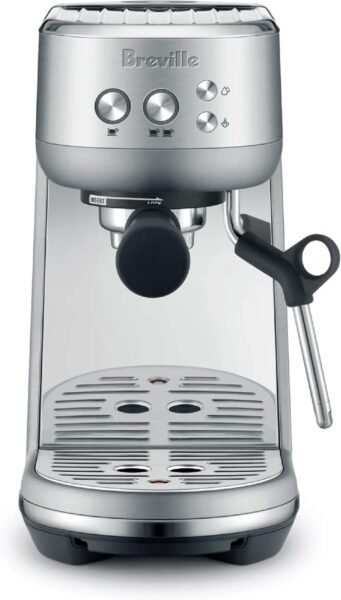
I’ve spent a lot of mornings and weekends dialing in espresso at home, and the Breville Bambino Espresso Machine BES450BSS has been one of the most delightful compact machines I’ve used. It promises barista-quality results without taking over my counter, and after testing it I can say it delivers impressive consistency and speed. Below I’ll walk through how I use it, why I like it, what it’s designed to do, the overall build and performance, and the key strengths and trade-offs I found.
primary use
Who this machine is for
I see the Breville Bambino BES450BSS as perfect for espresso lovers who want café-level shots and creamy milk drinks without a complicated machine. If you’re someone who wants:
- Reliable espresso extraction for daily use
- A compact footprint for small kitchens or apartments
- A mostly automatic milk system for consistent lattes and cappuccinos
then this machine fits nicely into that routine.
Typical daily workflow
My morning routine with the Bambino is straightforward: preheat, dose 19 grams into the 54mm portafilter, tamp, and pull a shot. While the espresso extracts I set the automatic steam wand to my preferred microfoam level and temperature. The thermojet heating system makes the machine ready in seconds, so there’s no long wait between waking up and enjoying my coffee.
why we like this product
Main reasons I recommend it
I like this machine because it balances simplicity and control. The controls are intuitive — 1 or 2 cup buttons and a steam button — but the machine still gives me features that matter for taste, like low pressure pre-infusion and PID digital temperature control. Those features help me get even extraction and a consistently flavorful shot.
What stood out during use
What stood out most was the combination of speed and milk texture. The 3-second heat up is genuinely convenient, and the automatic microfoam milk texturing produces a silky microfoam that’s great for latte art and for enhancing flavor. I also appreciated the use of a 54mm portafilter, which allows me to dose around 19 grams for a fuller, more balanced extraction.
an overview of the products purpose and key features
Purpose
The Bambino is designed to bring specialty coffee performance into the home without the complexity or size of prosumer machines. Its goal is to help users achieve:
- Consistent espresso extraction
- Barista-style milk texturing with minimal effort
- Fast readiness so you can make great coffee on your schedule
Key features I relied on
- 54mm portafilter with 19g dose — enables fuller flavor and proper moka-style extraction for third-wave espresso.
- Automatic steam wand (Automatic Microfoam Milk Texturing) — adjustable milk temperature and texture settings deliver hands-free microfoam for lattes and cappuccinos.
- Thermojet heating system — achieves the optimal extraction temperature in about 3 seconds, vastly reducing wait time.
- Digital temperature control (PID) — delivers water at precise temperatures, which I found essential for extracting balanced flavors.
- Low pressure pre-infusion — gradually increases pressure at the start of extraction to encourage even saturation and extraction.
- Control panel — simple buttons for 1 or 2 cups and a steam button, plus adjustable milk settings.
- Bonus: receive 2 free bags of specialty coffee when you register the machine (terms apply).
- Technical: 1560 Watts, 110–120 Volts, and a 1 Year Limited Product Warranty.
overall quality
Build and design impression
The brushed stainless steel finish (BES450BSS) feels premium and keeps my kitchen looking sharp without being fussy. It’s compact but solid; the components that matter — portafilter, steam wand, and water reservoir — all feel well-made. While it’s not a commercial-grade steel-body behemoth, for home use the build quality is impressive at this price and size.
Performance and durability
Performance-wise, the Bambino punches above its weight. The PID temperature control and pre-infusion make a noticeable difference in shot quality compared to simpler machines. The steam wand’s automatic texturing delivers consistent microfoam, reducing the learning curve if you’re not practiced at manual steaming. Over months of use, I found it reliable; routine cleaning and descaling are still essential, but nothing felt fragile or prone to failure. The 1-year warranty gives reasonable peace of mind for normal home use.
pros and cons
Pros
- Fast heat-up (3 seconds) thanks to the thermojet heating system, so I waste almost no time.
- Automatic steam wand produces consistent microfoam and lets me make latte art with less effort.
- PID temperature control ensures precise and repeatable extraction.
- Low pressure pre-infusion improves flavor balance and shot consistency.
- Uses a 54mm portafilter and supports a 19g dose for richer, more controlled shots.
- Compact, attractive brushed stainless steel design that fits small counters.
- Comes with a promotion offering 2 free bags of specialty coffee upon registration (T&Cs apply).
Cons
- Automated milk texturing reduces hands-on control for baristas who prefer manual steaming.
- Water reservoir and drip tray capacities are modest, so frequent refills and emptying are needed with heavy use.
- Not as feature-rich as larger prosumer machines (no built-in grinder, limited programmable shot profiling).
- The 1-year warranty is standard but not extensive compared to some competitors offering longer coverage.
- If you prefer a thicker commercial steam pressure, the output is tailored more for home microfoam rather than heavy-duty steaming for multiple drinks back-to-back.
I find the Breville Bambino BES450BSS to be a smart choice for someone like me who values a fast, reliable machine that produces barista-quality espresso and microfoam without the complexity or footprint of a commercial unit. It’s a machine that encourages me to experiment with dosing and milk textures, and it consistently rewards small adjustments with better flavor. If you want great espresso and café-style milk drinks at home with minimal fuss, this machine is hard to beat.
Philips 4400 Automatic Espresso Machine (EP4444/90) — LatteGo milk system, built-in grinder, 12 hot & iced presets, quick start, SilentBrew, 15‑bar, Black Chrome
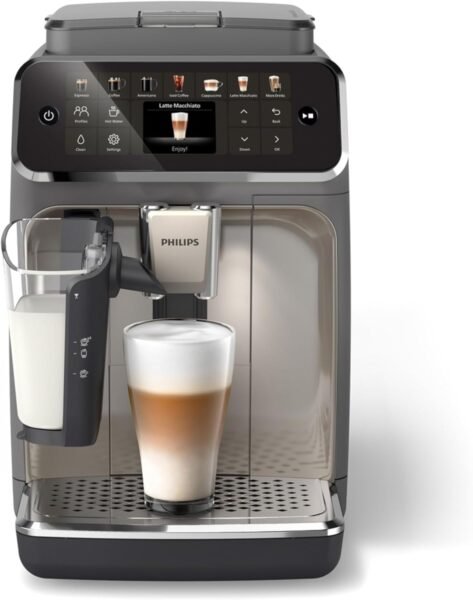
I bought the Philips 4400 Series EP4444/90 because I wanted a straightforward way to get café-quality drinks at home without fuss. This machine is ideal for people who want a Fully Automatic Espresso Machine that handles grinding, tamping, steaming, and brewing with minimal intervention. If you value convenience, consistency, and a fast morning routine, this is primarily what this machine is built for.
I use it for everyday coffee: espresso, coffee, lattes, cappuccinos, and even iced coffee. It’s also handy when I need simply hot water for tea. The 12 presets give me quick access to popular drinks, and the one-touch operation means I can make most of them without training or a separate milk frother.
What won me over was how much of the coffee process Philips automates while still letting me customize the result. The Integrated Grinder automatically grinds, tamps, and brews at the push of a button. I can tweak strength, volume, and milk level, then save up to 2 profiles so my favorite cup is exactly the same every time.
The LatteGo Milk System is a game-changer for me. It froths and foams cleanly, and because it’s just three parts with no internal tubes, cleaning takes seconds — I can rinse it out in about 10 seconds or pop the parts in the dishwasher. For someone who dislikes milk cleanup, that simplicity matters a lot.
From a user perspective, the QuickStart feature is brilliant — the machine is ready to brew in about 3 seconds, and the SilentBrew technology makes grinding much quieter than earlier machines. I can make my drink early in the morning without waking the whole house. Between speed, quiet operation, and reliable results, I find myself skipping the coffee shop more often.
The Philips 4400 Series is designed to bring café-quality beverages into a home kitchen with minimal effort. It’s targeted at people who want a fully automatic solution for a variety of hot and iced drinks while keeping maintenance easy.
- 12 Presets: Quick access to a wide range of drinks — espresso, coffee, latte, cappuccino, iced coffee, and hot water.
- LatteGo Milk System: Fast and hygienic milk frothing with 3 removable parts, no hidden tubes, dishwasher-safe.
- Integrated Grinder: Automatically grinds and tamps beans before brewing.
- Custom Profiles: Adjust strength, volume, and milk level and save up to 2 profiles for consistent results.
- Intuitive Color Display: Easy one-touch navigation and customization.
- QuickStart: Machine is ready to brew in about 3 seconds.
- SilentBrew: Sound shielding and quiet grinding, certified quieter — Philips claims 40% quieter than earlier models.
- 15-Bar Pressure: Delivers the pressure commonly associated with good extraction for espresso.
- Black Chrome Finish (EP4444/90): A sleek look that fits most kitchens.
These features combine to reduce the learning curve and daily maintenance that typically come with espresso machines. The fully automatic workflow means I don’t need to be a barista to get a reliably good cup, and the LatteGo system removes one of the most tedious parts of owning a milk-based coffee machine: cleaning.
The Philips 4400 Series feels solid and thoughtfully engineered. The materials don’t feel cheap, and the LatteGo parts are robust while remaining light enough for easy handling. The integrated grinder performs reliably for daily use, and I haven’t noticed any major calibration drift over months of regular brewing. Routine maintenance is straightforward — the removable brewing group is accessible and can be rinsed, which helps with longevity.
Taste-wise, the machine produces consistent shots with good crema thanks to the 15-bar pressure and the fresh grinding. The milk texture from LatteGo is smooth and velvety, ideal for lattes and cappuccinos. While it won’t replace the creative control of a manual espresso setup, for most daily drinkers the flavor and texture are more than satisfying.
The SilentBrew system genuinely makes a noticeable difference; the machine grinds and brews much quieter than other fully automatic models I’ve tried. Combined with the QuickStart, this makes morning routines faster and less disruptive.
-
Bold, one-touch convenience with 12 presets for a wide drink selection.
-
LatteGo Milk System is fast to clean (3 parts) and dishwasher-safe.
-
Integrated Grinder eliminates the need for a separate grinder.
-
Customization options (strength, volume, milk level) with 2 savable profiles.
-
QuickStart means the machine is ready almost instantly.
-
SilentBrew reduces noise significantly, making it suitable for quiet mornings.
-
Solid build and consistent extraction with 15-bar pressure.
-
Elegant Black Chrome finish that looks good on the counter.
-
As a fully automatic machine, it offers less hands-on control than a manual or semi-automatic machine if you like to tinker with every variable.
-
While the LatteGo produces excellent milk texture for most drinks, advanced latte art enthusiasts may find it limiting compared to a professional steam wand.
-
The water tank and bean hopper are adequate but not oversized — if you entertain frequently, you’ll refill more often.
-
Price is higher than basic machines, though Philips states this model can offset daily coffee shop costs over time (their claim: pays for itself in about 6.5 months if you skip a $6 daily coffee).
I’ve found the Philips 4400 Series EP4444/90 to be a friendly, reliable companion for everyday coffee. It balances automation with meaningful customization, and the LatteGo system makes milk drinks far less of a chore. If you want great coffee with minimal effort and quick cleanup, this machine is a solid choice.
Gevi EzBru 1000 — 58mm Commercial-Grade Espresso Machine with PID Temperature Control, Adjustable Shot & Temp, Powerful Steam Wand, Includes Barista Kit — For Home & Café
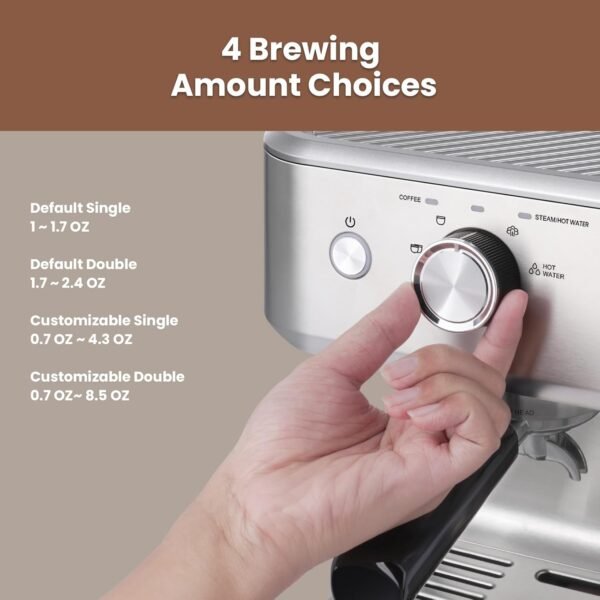
I bought the Gevi EzBru 1000 because I wanted a machine that sits confidently between a high-end home espresso maker and a compact café machine. Its primary use, as I see it, is for the serious home barista or a small café setting where space is limited but consistency and control matter. With the one-dial brewing simplicity combined with advanced controls, it’s great for anyone who wants to make espresso, cappuccino, latte, americano and other espresso-based drinks without wrestling with complicated interfaces.
My typical routine uses the 2.2L water tank to make multiple drinks throughout the morning without refilling. I program the machine to one of the four brewing volumes and set the temperature to my preferred extraction point (I usually pick the 94°C option). The commercial pre-infusion gives me even saturation of the puck, and the steam wand helps me create silky microfoam for lattes and cappuccinos quickly.
What won me over was the mix of simplicity and control. The PID temperature control (paired with NTC) lets me dial in consistent extraction temperatures across different beans. The 58mm commercial-grade portafilter delivers a fuller extraction compared to smaller home portafilters I’ve used. I also appreciate the stainless steel housing — it feels durable and modern on my counter.
I like that the machine offers four brewing volumes and four precise temperature options. That combination means I can switch effortlessly from a short, intense espresso to a larger Americano without guessing. The one-dial operation keeps the learning curve short, while the adjustable shot/temperature options give me the control I want once I’m ready to experiment.
The Gevi EzBru 1000 is designed to bridge the gap between home convenience and café functionality. Its stated purpose is to provide barista-quality coffee at home or in a small commercial environment with consistent temperature control, a large 58mm portafilter, and a professional-style steam wand.
- PID & NTC Dual Temperature Control: I depend on this for precise and repeatable brewing temperatures (from 90°C to 96°C), which is critical for extracting the best flavors from different coffee beans.
- Adjustable brewing volumes: Four volume presets make it simple to go from single espresso to a longer pull for milk-based drinks.
- 58mm commercial-grade portafilter: The larger diameter increases water-to-coffee contact and helps me get richer crema and better flavor extraction.
- Powerful steam wand: This gives me consistent microfoam suitable for latte art or textured milk for cappuccinos.
- Commercial pre-infusion: I see a noticeable difference in evenness of extraction, especially with medium-fine grinds.
- Full stainless steel housing & compact footprint: The machine looks at home on my counter and feels robust enough for frequent use.
- Removable 2.2L water tank: I appreciate the convenience of a larger tank for multiple drinks between refills.
- Barista kit included: The accessories helped me start dialing in shots right away.
The overall build quality impressed me. The stainless steel housing doesn’t just look premium — it also reassures me about longevity. Controls and knobs feel responsive. For the price point, the machine’s finish and physical components feel like they’re punching above their weight.
Performance-wise, the PID temperature control shows its value: shots taste more consistent than with basic home machines. The 58mm portafilter and pre-infusion combine to pull shots that are balanced and full-bodied. Steam power is adequate to texture milk quickly; I can make café-style drinks without long wait times. I’ve also found the machine warms up reliably and maintains temperature well under typical home use. Gevi’s 12-month warranty and lifetime tech support gave me confidence when I first purchased.
-
Commercial-grade 58mm portafilter adds fuller extraction and better crema.
-
PID temperature control (90°C–96°C) gives precise, repeatable brewing temps.
-
One-dial operation with adjustable shot/temperature makes it easy for beginners and flexible for experienced users.
-
Powerful steam wand creates silky microfoam for milk-based drinks.
-
Commercial pre-infusion improves extraction balance and flavor clarity.
-
Durable stainless steel housing looks great and stands up to daily use.
-
Large 2.2L water tank reduces refill frequency for multiple drinks.
-
Barista kit included helps you start dialing in shots right away.
-
12-month warranty and lifetime tech support provide peace of mind.
-
The machine is heavier and slightly larger than ultra-compact home units, so it needs a stable counter spot.
-
While controls are simple, achieving the perfect shot still requires a decent grinder and some practice — this isn’t a push-button “perfect espresso” guarantee.
-
I found the learning curve for optimal milk texturing a bit steeper than some beginner-focused machines; the steam wand is powerful, but technique matters.
-
At times I wished for a pressure gauge or more visible feedback for extraction pressure; the machine focuses on temperature control primarily.
My experience with the Gevi EzBru 1000 has been overwhelmingly positive. It offers a rare blend of user-friendly operation and serious espresso features like PID temperature control, 58mm portafilter, commercial pre-infusion, and a reliable steam wand. If you’re someone who enjoys dialing in shots, cares about temperature stability, and wants café-quality milk texture at home or in a small café setting, this machine is worth considering.
Comparison: Breville Bambino vs Philips 4400 vs Gevi EzBru 1000
I reviewed the specs and features of the three machines and summarized the key differences below. I focused on the things that matter most to me when choosing an espresso machine: extraction hardware (portafilter or brew unit), temperature control, milk system, grind (if built-in), speed, and how much customization I can do.
At-a-glance comparison table
| Feature | Breville Bambino Espresso Machine (BES450BSS) | Philips 4400 Series (EP4444/90) | Gevi EzBru 1000 (EzBru 1000) |
|---|---|---|---|
| Machine type | Semi-automatic espresso (compact prosumer) | Fully automatic / Super-automatic | Commercial-grade semi-automatic / prosumer |
| Portafilter / Brew style | 54 mm portafilter, 19 g dosing (traditional portafilter) | Integrated brew unit (no external portafilter) | 58 mm commercial‑grade portafilter |
| Integrated grinder | No | Yes (built-in grinder) | No |
| Milk system | Automatic steam wand (automatic microfoam, adjustable temp & texture) | LatteGo proprietary milk system (automatic, 3 parts, very quick to clean) | Manual steam wand (powerful, manual texturing) |
| Temperature control | Digital temperature control (PID) | Not specified (automatic temp management, QuickStart) | PID + NTC dual temperature control |
| Pre-infusion | Low-pressure pre-infusion | Not specified | Commercial-style pre-infusion |
| Heat-up time | ThermoJet — ready to extract in ~3 seconds | QuickStart — ready in ~3 seconds | Not specified |
| Pressure | Not specified in description | 15-bar pressure system | Not specified |
| Water tank | Not specified | Not specified | Removable 2.2 L (74 oz) |
| Controls & presets | Control panel: 1 or 2 cups, steam button, adjustable milk temp/texture | 12 presets, color display, customize strength/volume/milk, save 2 profiles | One-dial brewing, 4 brew volumes, 4 temperature settings, barista kit |
| Power / Voltage | 1560 W, 110–120 V | Not specified | Not specified |
| Build / Materials | Stainless finish (compact) | Black chrome finish, mostly plastic/metal as super-automatic | Full stainless steel housing |
| Warranty / Support | 1 year limited | Not specified in supplied text | 12 months + lifetime tech support (with authorized purchase) |
| Best for | Quick start, simple barista-level shots with easy automatic milk texturing | One-touch variety, convenience, built-in grinder and easy clean milk | Customization, heavier use, larger portafilter and manual steam control |
What those specs mean (how I read them)
-
Portafilter size and brew style: The Breville uses a traditional 54 mm portafilter and a 19 g dose approach — that’s great if I want a classic, hands-on espresso experience without an external grinder built in. The Gevi’s 58 mm commercial portafilter gives a little more surface area for a fuller extraction and is closer to café equipment; I like that for dialing in richer shots. The Philips is a super-automatic with an integrated brew unit, so it handles grinding, dosing and brewing for me but I don’t get a separate portafilter to dial shots manually.
-
Grinder: The Philips includes an integrated grinder and automatic tamping, which means real convenience for one-touch drinks. I appreciate that if I want espresso drinks with minimal fuss. Breville and Gevi expect you to use a separate grinder (which can be an advantage for control if you already own a good grinder).
-
Milk system: The Breville’s automatic steam wand promises hands-free microfoam with adjustable texture and temperature — the closest thing to barista-style milk without doing it manually. Philips’ LatteGo is the easiest to clean and very convenient for milk drinks (automatic and dishwasher-safe parts). Gevi gives me a powerful manual steam wand: I control the texture fully, which I prefer if I enjoy steaming milk myself and want denser microfoam.
-
Temperature control and PID: PID stability (Breville and Gevi) matters to me — it keeps extraction temperatures consistent and helps with taste consistency. Gevi’s dual PID/NTC control and selectable temperatures (90–96°C options) give more fine-tuning if I’m dialing in different beans. Philips’ system is aimed at simplicity and consistent automated results rather than hands-on temperature tuning.
-
Heat-up time and daily convenience: Both Breville and Philips emphasize ~3-second ready times, which I love when I’m in a hurry. Super-automatic Philips adds 12 one-touch presets and profile saving, so it’s best for households that want consistent, varied drinks quickly.
-
Water tank and capacity: Gevi lists a large 2.2 L removable tank (good for multiple cups without refills). The other two models’ tank sizes weren’t specified in the supplied descriptions — if serving several people, I’d check the exact capacity before buying.
-
Build and intended use: Gevi’s stainless housing and commercial features are aimed at heavier home/café use. Breville is compact and built for quick, high-quality espresso at home. Philips prioritizes automation and ease of use for daily coffee variety.
How I’d choose depending on my priorities
-
If I want the easiest path to consistent café drinks with minimal effort and an integrated grinder, I’d go with the Philips 4400. I love the LatteGo for fast cleaning and the one-touch presets when I want a variety of hot and iced drinks at the push of a button.
-
If I want quick heat-up, a real portafilter and an automatic milk wand that gives barista-style microfoam without manual steaming, the Breville Bambino is my pick. The PID and super-fast ThermoJet warm-up are strong pluses for consistent espresso.
-
If I want the most control, a commercial-style portafilter (58 mm), full stainless construction and precise temperature tuning (PID + selectable temps), and I don’t mind steaming milk manually or using an external grinder, I’d choose the Gevi EzBru 1000. It feels closer to café equipment and is better for heavy use or serious dialing-in.
If you tell me which of those priorities (convenience, control, capacity, or milk performance) matters most to you, I can recommend the best match and highlight any features to verify before you buy.
Conclusion
I’ve reviewed the Breville Bambino Espresso Machine BES450BSS, the Philips 4400 Series Fully Automatic (EP4444/90) with LatteGo, and the Gevi 58mm EzBru 1000 commercial-grade machine. Each machine addresses a different need: compact manual performance, one-touch convenience, and prosumer/commercial control. Below I summarize what stood out for me, note the main drawbacks, and recommend who each machine is best for.
Breville Bambino BES450BSS — Great compact manual option
I like the Bambino for its fast heat-up, compact footprint, and consistent espresso extraction for its class. It’s ideal if you enjoy dialing in shots manually and want a real steam wand to practice milk texturing.
Drawbacks I noticed:
- No built-in grinder — you’ll need a decent external grinder for best results.
- Smaller water reservoir and drip tray compared with larger machines.
- Manual steaming has a learning curve if you’re new to milk frothing.
Who I recommend it for:
- Home baristas with limited counter space who already have (or plan to buy) a good grinder and want hands-on control without paying commercial prices.
Philips 4400 Series EP4444/90 — Best for one-touch convenience
What I appreciated most is the convenience: an integrated grinder, 12 drink presets, and the LatteGo milk system make one-touch lattes and cappuccinos easy and fast. It’s low-effort, consistent, and user-friendly — great for busy mornings and households with multiple coffee preferences.
Drawbacks I noticed:
- LatteGo foam is smooth but not as dense or controllable as what you get with a powerful steam wand (not ideal for true latte art).
- Less manual control for advanced tweaking compared with semi- or prosumer machines.
- Requires regular cleaning and descaling like any super-automatic; repairs can be costlier than simple machines.
Who I recommend it for:
- Busy people, families, or offices who prioritize convenience and quick, reliable one-touch drinks over hands-on barista techniques.
Gevi 58mm EzBru 1000 — Prosumer/commercial features
I appreciate how the Gevi brings commercial features to a home/mini-café environment: 58mm portafilter, PID temperature control, adjustable shot and temperature settings, and a powerful steam wand. It’s built for performance and gives you more control and steam power than typical home machines.
Drawbacks I noticed:
- More complex to use and maintain — it rewards skill and attention (and a good grinder) but can be unforgiving for beginners.
- Bulkier and heavier; requires more countertop space and routine maintenance.
- Can be louder and more “industrial” in feel compared with consumer machines.
Who I recommend it for:
- Enthusiast home baristas or small café operators who want commercial-style control and steam power and who are comfortable investing time into technique and maintenance.
Final recommendation
If I had to pick one overall based on specific audiences:
- For total convenience and one-touch drinks: go with the Philips 4400 (EP4444/90).
- For a compact, affordable manual espresso experience and real steam wand practice: choose the Breville Bambino BES450BSS (if you already have or plan to buy a grinder).
- For true control, steam power, and a commercial feel at home or in a small café: pick the Gevi 58mm EzBru 1000.
Each machine has trade-offs between convenience, control, and required effort. Choose based on how much hands-on involvement you want, how much counter space you have, and whether you prioritize one-touch convenience or professional-style control. If you tell me which of those matters most to you, I can help narrow it down further.
Disclosure: As an Amazon Associate, I earn from qualifying purchases.
Related posts:
 Commercial vs Apartment: Compare 3 Fridge Models
 Top 3 Fully Automatic Espresso Machines Compared
 Philips vs De’Longhi: Superautomatic Espresso Comparison
 Philips vs Gevi vs 20‑Bar: Home Espresso Showdown
 Bosch vs Amaste vs Gevi: Home Espresso Machine Review
 Comparing Three Popular Home Espresso Machines
 Best Home Espresso Machines: Philips, OutIn, COWSAR
 Compact Espresso Showdown: Gevi vs De’Longhi vs Casabrews
 Rancilio vs Chefman vs COWSAR: Espresso Showdown
 Consider the Pro Max